
Environmental Education at UzhNU: Future Defenders of the Planet and Public Health
Environment Day is traditionally celebrated on the third Saturday of April. Its goal is to draw attention to environmental protection issues and raise environmental awareness among Ukrainians. Specialists in the fields of environmental protection and ecology have always been in high demand, as their knowledge and skills are key to sustainable development and the protection of the planet in the face of global challenges.
At Uzhhorod National University, training for specialists in these fields takes place at the Faculty of Biology and the Educational and Scientific Institute of Chemistry and Ecology. To better understand the specifics of the curriculum and training conditions, we spoke with the heads of these departments, as well as the chairs of the relevant departments—Entomology and Biodiversity Conservation (Faculty of Biology), and Ecology and Environmental Protection (Institute of Chemistry and Ecology).
Let’s start with the Educational and Scientific Institute of Chemistry and Ecology. Dr. Vasyl Lendel, Ph.D. in Chemistry, Professor, and Director of the Institute, told us more about the activities of the ecology division, the role of the “Ecology” program among others, and the conditions of study.
– Vasyl Georgievych, how does the environmental section of the institute operate?
– About 12 years ago, the specialty 101 “Ecology and Environmental Protection” was introduced at the Educational and Scientific Institute of Chemistry and Ecology. Since then, we have been training leading specialists for both schools (environmental educators) and industrial enterprises (environmental engineers).
The first few years after the program was added were particularly promising and productive. This was due to a 2004 Cabinet of Ministers resolution requiring every enterprise to have an environmental engineer on staff responsible for compliance with environmental standards and safety regulations. However, the situation has changed somewhat over time. This is because these specialists often became a problem for plant management, as they insisted on adherence to environmental standards. As a result, factories now employ mostly experienced specialists, and they hardly hire new staff, explaining this by the fact that such a position is no longer included in the staffing structure.
With the increased focus on environmental education in schools, the subject “Ecology” was introduced, and we began training specialists not only for industry but also for teaching in educational institutions.
Unfortunately, ecology was later discontinued as a school subject. This complicated the situation, as environmental science graduates could work as both chemists and ecologists, meaning a single teacher would have taught two subjects at once.
– What role does the training of ecologists play among the faculty’s other educational programs?
– The training of ecologists holds a leading position among other specializations. Moreover, this program is in high demand among applicants and has one of the highest competition rates at the institute.
The program is offered at two academic levels—bachelor’s and master’s. Both programs are currently active and were accredited for the 2024–2025 academic years. The master’s program lasts 1 year and 4 months (unlike chemistry, where the master’s program lasts two years).
Each year, the department admits over 10 students per class, which demonstrates sustained interest in this field. In the future, graduates have the opportunity to find employment both in the education sector and in industry.
– What conditions are in place for training environmental specialists?
– The Department of Ecology has a comprehensive material and technical base for high-quality training of specialists. Lectures, practical sessions, and laboratory classes are conducted using modern equipment. In particular, students have access to environmental monitoring devices, as well as to teaching laboratories equipped to modern standards. For example, we have an automatic air monitoring device installed. It displays both current and historical data. Even weather companies cross-check their results with us because our method is more accurate. The only obstacle is a power outage.
The department’s faculty is highly qualified: two professors work at the department, and the other instructors are associate professors and candidates of sciences, mostly graduates of our own institute. This creates a strong academic foundation for future specialists.
An international conference on ecology is scheduled for May, which will likely be held in a hybrid format. Both domestic and international scientists will participate—this once again confirms the department’s high level of integration into the global scientific community.
The Department of Ecology and Environmental Protection operates within the Educational and Scientific Institute of Chemistry and Ecology, where specialists are trained in the specialty 101 “Ecology and Environmental Protection.” The head of the department, Dr. Serhii Sukharev, Ph.D. in Chemistry, spoke about the academic program and future career prospects.
– Serhii Mykolaiovych, what knowledge and skills do students in the “Ecology and Environmental Protection” program acquire?
– During their studies, students gain both theoretical and practical knowledge. All of this is outlined in the program learning outcomes and the national education standards.
Practical skills cover a wide range of topics—from biodiversity conservation to environmental management systems and decision-making under uncertainty, which is particularly important in the context of environmental safety.
As for the disciplines, the curriculum includes fundamental general education courses: advanced mathematics, physics, chemistry, history of Ukraine, history of Ukrainian culture, philosophy, as well as specialized environmental courses—general ecology, neoecology, environmental monitoring, environmental safety, economics of natural resource use, and others. Starting in the second year, each semester students select three elective courses—one from the university catalog to develop soft skills, and two from the department (specialized), which also includes courses from other faculties, particularly the biology faculty—such as general biology and nature conservation. This allows for the development of both general and professional competencies.
The specificity of the program lies in its interdisciplinary nature—specialists from various faculties and departments are involved in the educational process: chemists, mathematicians, physicists, biologists, engineers, economists, and management specialists.
– How is the practical component of the program structured? Is there an opportunity to participate in research or fieldwork?
– As already mentioned, our students begin both academic and industrial internships starting in their second year. The first—a general environmental internship—is typically conducted in nature reserves. The main base for these internships is the Uzhansky National Park. Bachelor’s students also have internships in environmental management of natural sites and industrial placements, while master’s students have industrial, scientific-environmental, and pre-diploma placements. There are appropriate facilities for these placements, with which long-term or short-term agreements have been signed. Prior to the Covid-19 pandemic, our students had the opportunity to travel abroad to gain practical experience, particularly in Slovakia, Hungary, and Poland. I hope that after Ukraine’s victory in the war with Russia, this component will be reinstated in the educational system.
In addition, our students are actively involved in scientific research. Beyond the required components (coursework and thesis), there is a student research society through which young people participate in conferences. They participate quite actively in such initiatives. In particular, an international conference titled “Environmental Safety of the Carpathian Euroregion” will be held in May (13–15), in which our students will also participate.
I would like to note that research work is mandatory, as it is precisely this work that fosters critical thinking, the ability to draw conclusions, and the skill to identify key points, among other things, in students. We hold an annual student research conference, which includes a section on “Ecology and Environmental Protection.” At this conference, students present the results of their research, including materials from their thesis projects. Additionally, research publications by students in Ukrainian professional journals and/or journals indexed by international scientometric databases are encouraged. Scientific validation of qualification theses is a mandatory requirement for admission to the defense.
Informal education is certainly encouraged when it comes to platforms, courses, and other resources directly related to academic disciplines or the educational program.
In addition, students are involved in the creation of educational programs, as they are also internal stakeholders. When we make changes to the curriculum, their opinion is always taken into account, which is extremely important from a practical standpoint. Young people have their own vision of how things should look, so we discuss their proposals and listen to them.
– In which fields can graduates of this program work?
– Graduates of the “Ecology” program can work in the field of environmental management, specifically at the Tisa River Basin Water Resources Administration, the State Environmental Inspection in Zakarpattia Oblast, the Department of Ecology and Natural Resources of the Zakarpattia Oblast State Administration, the Hydrometeorological Service, as well as at companies that require full-time ecologists to track waste generation and disposal, calculate environmental fees, and so on.
It is worth noting that at the bachelor’s level, we also prepare specialists for opportunities to conduct chemical research in analytical laboratories, for example, at institutions such as the Transcarpathian Scientific Research Expert-Criminalistic Center of the Ministry of Internal Affairs of Ukraine, where, incidentally, our graduates are employed. We should also mention the BUVR water and soil monitoring laboratory, as well as general-purpose environmental laboratories.
I would like to note that students pursuing higher education have the opportunity to work in their field while still in school; this is particularly true for master’s students enrolled in distance learning programs during the evening shift. The administration of the Educational and Research Institute of Chemistry and Ecology welcomes and supports students who are working in their profession. In addition, they also have the opportunity to complete internships at the companies where they work.
Thus, employment opportunities are vast, and looking to the long-term future, we understand that after Ukraine’s victory, ecologists will be in high demand, as the environmental damage caused as of early 2025 was estimated at over $47 billion. Environmentalists will play a key role in coordinating the restoration of ecosystems damaged by military operations. Undoubtedly, the social dimension and the human factor are critically important—we have lost lives, and infrastructure has been destroyed. Yet, the environmental component must not be overlooked. Today, a new term has even emerged—“ecocide”—which refers to the mass extermination of flora or fauna, ecological destruction, and the like.
We have already noted that at UzhNU, in addition to the Institute of Ecology and Environmental Protection, the Faculty of Biology also trains future ecologists and specialists in the field of environmental protection. We will learn more about the educational programs that train these specialists, as well as how the Faculty of Biology promotes environmental protection among students, from the head of the Faculty of Biology, Candidate of Biological Sciences, Associate Professor Yaroslava Hasynets.
– Yaroslava Stepanivna, what educational programs at the Faculty of Biology of UzhNU train specialists in environmental issues?
– Every educational program at the Faculty of Biology addresses environmental protection issues. Future teachers gain theoretical and practical knowledge in environmental disciplines to teach future students to love and protect nature. Applied biologists acquire environmental protection skills that enable them to work in environmental inspection agencies, environmental protection institutions, and nature reserve funds. Agricultural specialists study sustainable natural resource management and the ecological aspects of crop cultivation technologies.
– How does the Faculty of Biology at UzhNU promote environmental protection among students?
– The educational programs for students in the Faculty of Biology have a distinct ecological focus, with a significant portion of the curriculum incorporating environmental protection aspects. This is due to the fact that Transcarpathia is a unique region home to numerous nature reserve sites of various levels. In addition, our students have the opportunity to complete internships in these areas and gain practical skills in this field. Students are actively involved in various environmental initiatives aimed at preserving biodiversity and maintaining a clean environment; they have the opportunity to contribute to the harmony of our living environment through their own example and actions.
– Why is it important to choose professions related to ecology, biology, and environmental protection?
– Over the billions of years of Earth’s existence, conditions have been created for life to flourish. All the interrelationships between living organisms and abiotic factors have been shaped through long-term evolutionary processes. However, humans, considering themselves the most important component of the ecosystem, attempt to adapt the surrounding world to their own needs, which often leads to catastrophic consequences for the environment. We must realize that nature is the habitat for all living organisms, each of which is an important component of this planet, and that disrupting this balance will lead to negative changes that will sooner or later affect humanity itself. Students in the Faculty of Biology, regardless of their chosen program, learn how to live in harmony with nature and avoid depleting the planet’s resources, as these principles form the foundation of their education and future professional careers.
The Faculty of Biology has a specialized department dedicated to this field—the Department of Entomology and Biodiversity Conservation. We’ll learn more about the training of specialists, the educational process, and employment prospects from the department head, Vladislav Mirutenko, Ph.D. in Biology, Associate Professor.
– Vladislav Valentynovych, what knowledge and skills do students in the department acquire to become competitive specialists in the field of environmental protection?
– During their studies, students acquire professional knowledge in the field of applied entomology and environmental protection, develop skills in identifying various groups and species of insects (including rare, beneficial, and harmful ones), how to use biodiversity databases, how to prepare materials for scientific publications, reports, etc., and gain experience participating in conferences, international environmental education, and nature conservation projects.
– What opportunities for practical experience do students in the department have?
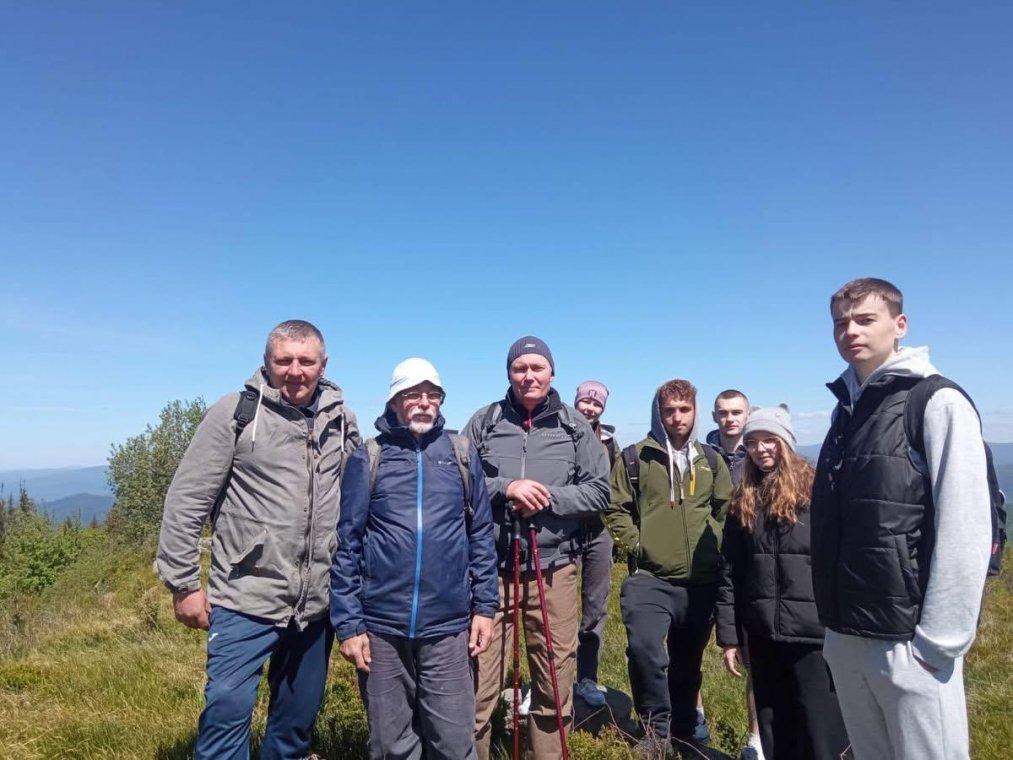
– Students have the opportunity to complete fieldwork and laboratory internships. In particular, we collaborate with many national nature parks, and recently, as part of an internship, we visited the Uzhansky National Nature Park, where students gained practical experience in using various methods for collecting entomological specimens, as well as their subsequent processing and analysis.
Students also worked on an initiative project to monitor the quality of natural waters in the Laboratory for Monitoring Aquatic and Terrestrial Ecosystems, where they conducted research analyzing water samples collected from various locations in Zakarpattia. The results were presented at scientific conferences and published in scientific journals.
– How in demand are the department’s graduates in the job market, and where can they work after graduation?
– Applied entomology is currently a highly sought-after field. Graduates can find employment in the phytosanitary service, quarantine inspection, forensic medicine, forestry, and agriculture. In addition, our graduates can successfully work in nature conservation institutions (national parks, nature reserves) and government agencies under the Ministry of Environmental Protection and Natural Resources of Ukraine.
Valeria Melnyk,
Information and Publishing Center.